How To Evaluate Lake Lots And Backlots Around Crosslake
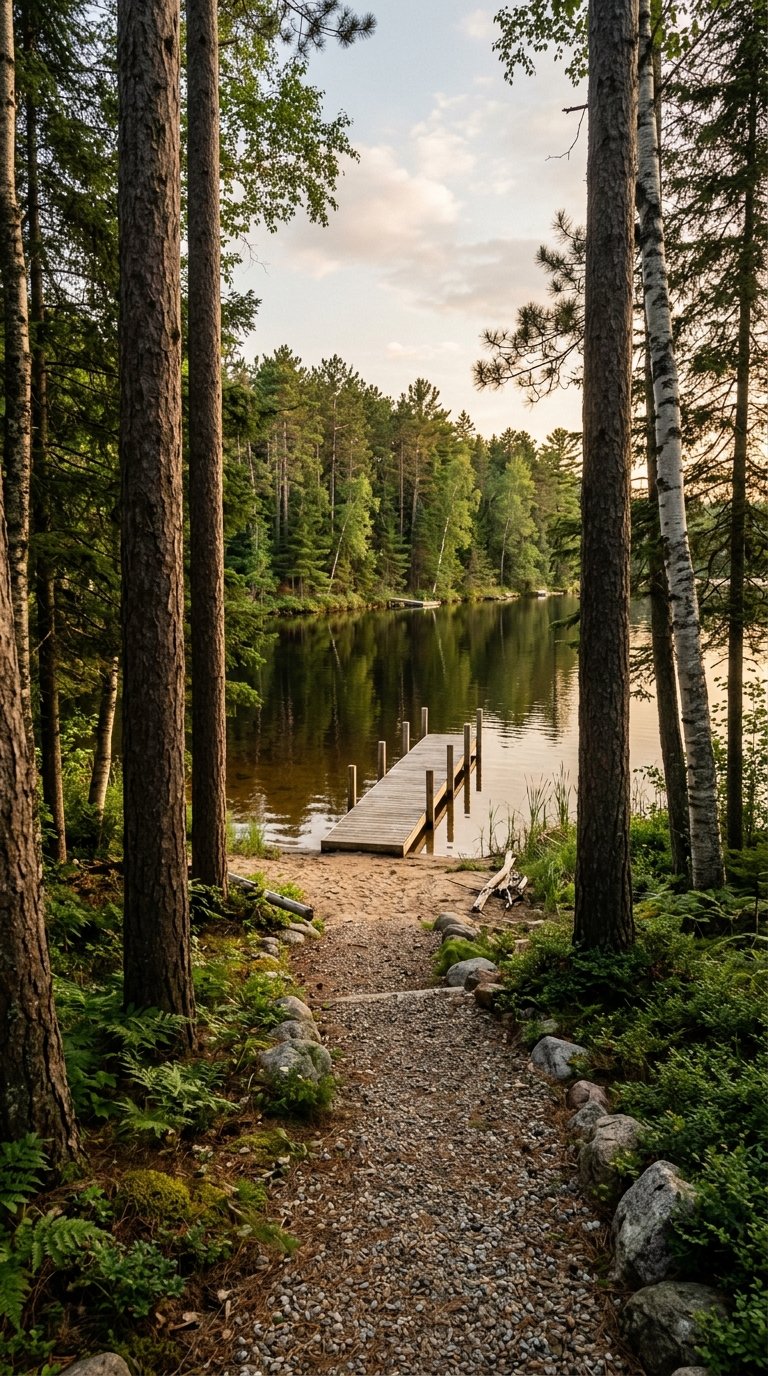
Thinking about buying a lot near the Whitefish Chain because it looks like a lake property? In Crosslake, that first impression can be expensive if you do not know how the lot is classified, what rules apply, and whether the site can actually support the home you want to build. If you are comparing true lake lots to backlots with shared or nearby access, this guide will help you ask the right questions before you make an offer. Let’s dive in.
The most important first step is figuring out whether the parcel is riparian, non-riparian, or tied to some form of access lot. In Crosslake, a riparian lot abuts public waters, while a non-riparian lot does not. That distinction shapes everything from lot standards to building options.
Crosslake’s ordinances also define controlled access lots and alternative access lots. A controlled access lot is intended to provide access to public waters, while an alternative access lot is used when direct riparian access is not feasible because of protected vegetation, wetlands, or other critical fish or wildlife habitat. If a listing sounds like “lake access,” “shared access,” or “waterfront feel,” you want those terms clarified early.
Crosslake sits on the eastern shore of the Whitefish Chain, and both Whitefish Lake and Cross Lake Reservoir are classified by the Minnesota DNR as General Development waters. That matters because Crosslake applies lot standards based on that classification.
For a single-family riparian lot on a General Development lake, the city’s lot-size sheet shows a minimum of 30,000 square feet and 100 feet of width. For a non-riparian General Development lot, the minimum is 40,000 square feet and 150 feet of width. A lot may sound simple in marketing remarks, but the legal classification often tells you much more about what is realistic.
Some Crosslake-area parcels feel like waterfront because they sit on a channel, near a bay, or next to low shoreline ground. But that does not automatically mean they function like a straightforward buildable lake lot. In many cases, the practical question is not just whether you can see water, but where the lot lines fall in relation to the ordinary high water level, or OHWL.
Crosslake defines the OHWL for watercourses as the top of the bank of the channel, and for reservoirs and flowages as the normal summer pool. On channel-adjacent parcels, that can turn into a survey and title issue, not just a visual one. If a property is advertised as waterfront or channel frontage, you should verify exactly how the city and survey treat the water boundary.
A lot can be legally created and still be hard to build on. In Crosslake’s shoreland district, only land above OHWL counts toward lot area and buildable area. That means a parcel with wet ground, low shoreline, or oddly shaped frontage may offer less usable space than the total acreage suggests.
Setbacks also narrow your options. For General Development lakes, Crosslake’s lot-size sheet shows a 75-foot structure setback, and the city also applies a 75-foot SSTS setback. On smaller or shallower lots, those requirements can squeeze the area available for the house, septic, driveway, and outdoor living space.
A true lake lot and a backlot can both work well, but they solve different problems. A riparian lot usually gives you direct frontage and a more traditional waterfront setup, but it also comes with tighter shoreland constraints and often a more complex site plan. A backlot may offer more flexibility for the house footprint, parking, and privacy, but only if legal access and utility questions are clear.
Here is a simple way to compare the two:
| Feature | Lake Lot | Backlot |
|---|---|---|
| Water relationship | Direct riparian frontage | No direct frontage |
| Minimum GD standards | 30,000 sq ft, 100 ft width | 40,000 sq ft, 150 ft width |
| Shoreland constraints | Usually more immediate | May still apply depending on location |
| Access question | Usually direct | Must verify legal water access separately |
| Build planning | House, septic, setbacks compete for space | More room in some cases, but soils and septic still matter |
The key is not deciding that one type is better in general. It is deciding which one fits how you want to use the property.
Access is one of the biggest areas where buyers get surprised. In Crosslake, controlled access lots for non-riparian owners in new minor subdivisions or plats are prohibited. Alternative access lots may be allowed only when direct access would likely damage protected vegetation, wetlands, or other critical habitat.
There are also rules for private watercraft access ramps. Crosslake allows a private residential lot to have a ramp only on lakes without public accesses, and the ramp may not exceed 15 feet in width from the lake to the structure setback line. If an access arrangement is part of the appeal, you want to know exactly what kind of access exists, who owns it, and how it is governed.
Alternative access lots bring another layer. They must be jointly owned by the benefiting riparian owners and governed by an owners’ association. So before you count on a shared lake experience, confirm whether the ownership and management structure is already in place.
In Crosslake, you should always ask whether the parcel is inside city limits or under county jurisdiction. That matters because some standards and permit paths differ. Even when the general shoreland framework is similar, details like impervious-surface review can change depending on who governs the property.
For example, Crosslake’s current permit application says shoreland parcels with impervious cover over 15 percent must submit a stormwater management plan. The worksheet counts structures, driveways, patios, sidewalks, boat ramps, and other hardscape. Crow Wing County summary materials use a different framework with residential shoreland maximums of 15, 20, or 25 percent depending on stormwater or BMP conditions.
That difference can shape your entire site plan. A parcel that seems large enough on paper may still become tight once you add the house, garage, driveway, parking, and shoreline improvements.
When buyers picture a lot, they usually focus on where the house will sit. In reality, the lot has to support much more than the house alone. Crosslake’s land-use permit application effectively lays out the due-diligence checklist: lot width and depth, lake or river name, wetlands, bluffs and steep slopes, OHW, setbacks, septic and well locations, driveway and parking, and existing or proposed impervious area.
That is why lot shopping and build planning should happen together. You are not just buying a view or a tax parcel. You are buying a site that needs to work for the full layout.
One of the biggest practical questions is whether the property will connect to city sewer or rely on on-site septic. Crosslake does have a city sewer department and wastewater treatment facility, but you should verify whether that service actually reaches the parcel you are considering. Never assume a lot is sewered just because it is near developed properties.
If the property uses septic, status matters before closing. Crosslake says a septic compliance inspection must be current within three years, or the system must have been installed or upgraded within the last five years. The city’s septic FAQ also says a compliance inspection is required for property transfers unless a recent inspection, recent installation, or valid operating permit already exists.
Septic setbacks matter too. Crow Wing County’s summary sheet lists septic tank setbacks of 50 feet from both Type A and Type B wells, and 10 feet from property lines and road rights-of-way. Drainfields must be 100 feet from Type A wells and 50 feet from Type B wells.
Vacant land can look clean and simple in photos while hiding real site constraints. Crow Wing County notes that local surficial geology includes till, sand and gravel, and lacustrine sand. The county also says the surficial sand aquifer has very little protective cover and a shallow water table, making it highly to very highly sensitive to pollution.
In practical terms, that means some lots are more complicated for drainage, septic feasibility, and long-term site design than they first appear. Low backlots, channel-edge parcels, and sites with wetter ground deserve extra scrutiny. A nice tree line and open building area do not tell you everything you need to know.
Buyers sometimes assume that once they own the lot, they can clear brush, move dirt, and shape the site as needed. In Crosslake, shoreland work often requires permits. The city says most dirt moving, vegetation removal, and landscaping in shoreland zones require a shoreland alteration permit.
Crow Wing County defines the shoreland zone as 1,000 feet from a lake and 300 feet from a stream. The county also notes that wetter areas above OHWL may be wetlands regulated under the Wetland Conservation Act. This is especially relevant for low-lying lots and channel properties where water, vegetation, and buildable area all intersect.
Accessory structures can affect whether a lot works for your plans. If you want a small storage shed near the water for life jackets, fishing gear, or dock items, Crosslake’s shoreland factsheet allows a lakeshore shed up to 120 square feet and 12 feet high if it is at least 20 feet from OHW and meets other setbacks. It also cannot be used for human habitation.
That may sound minor, but details like this matter when you are trying to fit a full lake setup onto a smaller parcel. On tighter lots, every improvement competes for room.
Your build plan should shape your lot search from day one. Minnesota treats modular homes and manufactured homes differently. State law defines a modular home as a one- or two-family dwelling built to Minnesota building rules and attached to a foundation designed to the State Building Code, while manufactured homes follow the HUD construction and installation framework.
That distinction matters because local installation permitting and inspections still come into play. Crosslake’s permit application requires contractor-license information or an owner-exemption acknowledgment, and the city says property lines and proposed structure corners must be staked before inspection. Construction also cannot start before permit approval.
If you are planning a site-built, modular, or manufactured home, make sure the lot can support that specific path. A parcel may be legal in general but still be too tight for your preferred footprint, septic field, driveway, and stormwater needs.
If you are evaluating lake lots or backlots around Crosslake, keep your due diligence focused on a few key questions:
Those questions usually separate a realistic building site from a parcel that only looks good in listing photos.
Around Crosslake, two lots with similar prices and similar views can have very different build paths. The difference often comes down to lot type, jurisdiction, access rights, septic feasibility, and how much land is actually usable once OHWL and setbacks are mapped out. That is why buyers who do the most careful early homework often save the most time, money, and stress.
If you want help comparing lake lots, backlots, or buildable land around the Whitefish Chain, Mike Kennedy can help you sort through the details and focus on parcels that match your goals.
The more earnest money that the buyer deposits indicates to the seller a higher level of commitment.
Real estate investment is a long game, but can reap many benefits.

An Infrequently-used Mortgage Program to Help Free Up Cash
Mike offers advice on the best time to list real estate for Fall & Winter market in the Brainerd Lakes Area.

Easy ways to get to know people in the community.

How to Get the Most Out of Your Home Inspection

The shift to indoor living and holiday entertaining are right around the corner.

Increased property values offer many options.

Hiring the right moving company can make a big difference.
Mike offers years of proven experience successfully helping clients, buy, sell and invest in Lake Country Real Estate.