Can a Nisswa Cabin Work for Year-Round Living?
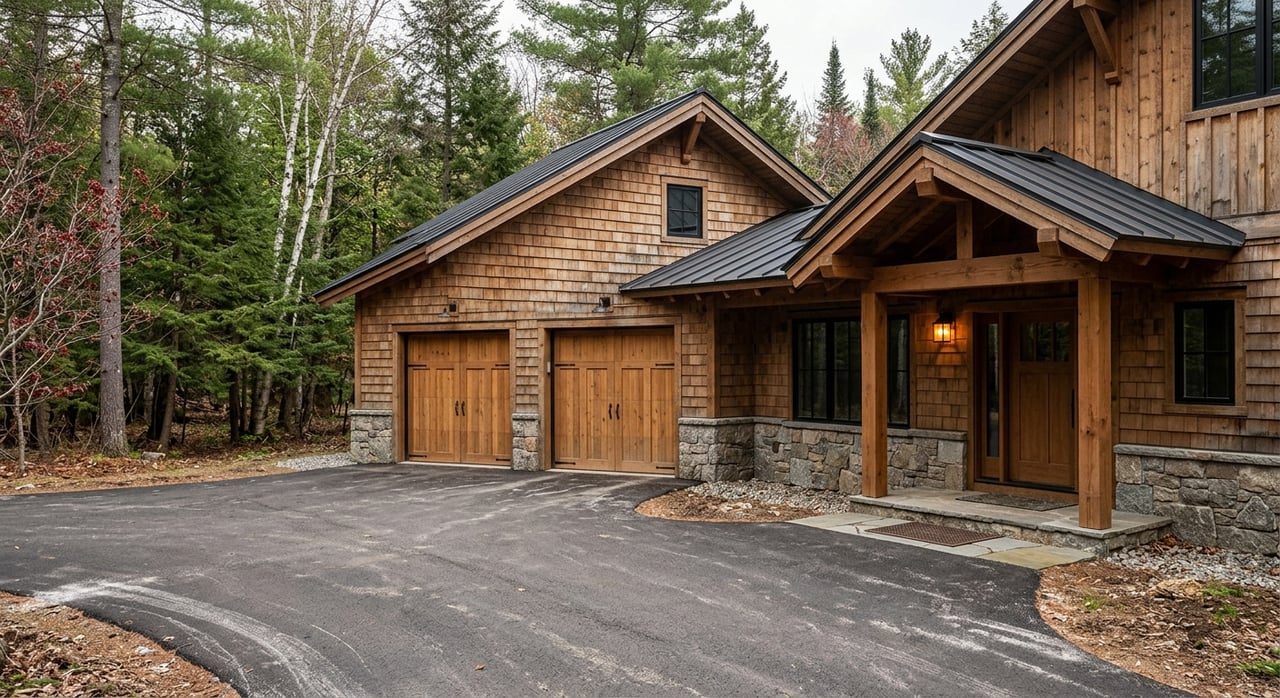
Dreaming about turning your Nisswa-area cabin into a full-time home? It sounds simple at first. Add insulation, update the heat, and enjoy lake life year-round. But around Nisswa, the bigger question is often whether the lot, access, parking, and septic setup can legally and practically support full-time living. If you are weighing a remodel, a move, or a fresh purchase, this guide will help you understand what matters most before you commit. Let’s dive in.
Before you price out a remodel, you need to know which local government has authority over the property. Around Nisswa, that could be the City of Nisswa, Crow Wing County, or a township. In shoreland areas, local governments make land-use decisions, and local ordinances can be more restrictive than the state baseline.
That matters because many cabins near Nisswa fall under shoreland rules. In Crow Wing County, shoreland includes land within 1,000 feet of a lake or pond and 300 feet of a river or stream. So even if a property is not directly on the water, it may still be regulated as a shoreland lot.
For buyers and owners, that means the cabin itself is only part of the story. The property’s location on the map can shape what you can repair, replace, or expand.
Many Nisswa-area buyers focus on the house and overlook the site rules. On the Gull Lake Chain and nearby waters such as Gull Lake, Nisswa, and Hubert, the Minnesota DNR classification list identifies these as General Development waters. That classification comes with key standards that can affect a year-round conversion.
On General Development lakes, the state standard uses a 75-foot structure setback from the ordinary high water level if the property is unsewered and 50 feet if it is sewered. On-site sewage treatment systems must be set back 50 feet from the ordinary high water level. Impervious surface coverage is also capped at 25% of lot area.
Those numbers can become a big deal fast. A larger driveway, patio, garage addition, or expanded living area can push a property closer to its lot limits than you expect.
Impervious coverage includes surfaces that do not absorb water well, such as buildings, driveways, and patios. If a lot is already close to the 25% cap, adding square footage may be difficult even if the cabin itself seems small. This is one reason some cabin owners discover that a rebuild or major addition is not as straightforward as they hoped.
General Development waters are compatible with both seasonal and year-round residential use. But compatible does not mean unrestricted. The rules still reward careful planning, especially on smaller lots or older properties built under different standards.
This is one of the biggest issues for older lake properties. If a cabin sits on a nonconforming lot or already has nonconforming setbacks, your options may narrow quickly.
Under Minnesota shoreland rules, existing nonconforming structures may continue through repair, replacement, restoration, maintenance, or improvement, but not expansion. That means you may be able to update parts of the cabin, but adding more living space can be much harder than expected.
In Nisswa, the standards become even more important if a nonconforming structure is removed, demolished, or damaged beyond 50% of its market value. Any replacement then must meet current standards, including a 75-foot lakeshore setback, 25% impervious coverage, a 10-foot side-yard setback, and a 20-foot road right-of-way setback.
For some owners, that can completely change the math. A cabin that has worked for decades as a seasonal place may not be easy to replace in the same footprint.
Nisswa also places specific limits on guest cabins in the Shoreland Residential District. A guest cabin may not exceed 700 square feet or 15 feet in height. It also must meet all setbacks, impervious coverage limits, and septic-capacity or sewer-connection requirements.
The city also states that existing boathouses and other detached accessory structures within the lake setback cannot simply be converted into a guest cabin or guest quarters. If your long-term plan includes extra space for visitors, this is something to verify early.
Many owners assume permits only apply to major construction. In Crow Wing County, that is not always the case. The county requires permits for many projects that lake owners might think of as minor, including patios, sheds, walkways, dirt moving, landscaping, or vegetation removal within the structure setback to public water.
That means even a modest cabin refresh can trigger review. If your goal is to make a place work better for full-time living, it is smart to understand the permit path before you finalize plans or costs.
In the City of Nisswa, shoreland standards are intended to be at least as restrictive as statewide shoreland standards. The city also states that its shoreland standards govern if there is any oversight, exclusion, or question in the city ordinance. In practical terms, buyers and owners should assume that shoreland review deserves close attention.
A cabin that feels perfect in July may function very differently in January. Year-round living is not just about insulation and a furnace. You also need reliable winter access.
Crow Wing County maintains county roads, but private residents or homeowner associations maintain private roads and roads in private subdivisions. If a driveway connects to a county road, the county says a permit is required before construction.
This is an easy detail to overlook when you are focused on the home itself. If the road is private, you will want to verify who handles snow removal, how access is managed, and whether winter maintenance is dependable enough for daily living.
In the City of Nisswa, on-site parking or garage space is required in all districts unless exempted. On-street parking is not allowed under any circumstances. The city also says on-site parking spaces are not to be used for storage.
For a full-time resident, that creates practical questions. Where will vehicles go in winter? Is there enough room for guests? Is there space for snow storage without creating site issues? These details may sound small, but they can affect whether a property truly works as a forever home.
Year-round occupancy depends on utility systems as much as on the structure itself. Minnesota rules say any premises used for human occupancy must have an adequate sewage-treatment method, and private systems must meet Minnesota Department of Health, Minnesota Pollution Control Agency, and local standards.
In Crow Wing County, a septic compliance inspection checks whether the tank is watertight, whether the drainfield has the required separation from saturated soil or bedrock, and whether the system functions properly overall. For a cabin moving toward full-time use, that inspection can be one of the most important checkpoints.
The county’s shoreland guide also notes that most homes in shoreland areas rely on subsurface sewage treatment systems. It also explains that septic failure can contaminate groundwater and nearby lakes. Septic tanks should typically be pumped every one to three years depending on use.
If you are considering a conversion, it is wise to budget for:
A cabin may look move-in ready on the surface, but an undersized or aging system can change your budget quickly.
Not every cabin is a great candidate for full-time conversion. Sometimes the best move is not to force a difficult remodel. It is to find a property that already fits your long-term goals better.
That can be especially true when the cabin is nonconforming, the lot is close to its impervious surface limit, the septic system cannot support year-round use, or the desired addition would push the structure closer to the water than the rules allow. In those cases, buying a different property may be the more practical path.
This is where local guidance matters. Around Nisswa, one property may look similar to another online, but the legal and physical realities can be very different from lot to lot. A thoughtful purchase strategy can save you time, money, and frustration later.
If you are shopping for a cabin with forever-home potential, focus on the property as a whole rather than the charm of the structure alone. A careful review upfront can help you avoid surprises.
Here is a simple checklist to use:
This kind of due diligence is especially helpful for out-of-area buyers who love the Nisswa lifestyle but may not know how shoreland rules affect remodeling decisions.
A cabin can absolutely become a forever home around Nisswa. But the best candidates are usually the ones where the lot, systems, access, and local rules all support the life you want to live. If you want help comparing properties, evaluating a remodel-versus-move decision, or finding a lake home that already fits year-round living, Mike Kennedy can help you make a clear, confident next move.
The more earnest money that the buyer deposits indicates to the seller a higher level of commitment.
Real estate investment is a long game, but can reap many benefits.

An Infrequently-used Mortgage Program to Help Free Up Cash

Mike offers advice on the best time to list real estate for Fall & Winter market in the Brainerd Lakes Area.

Easy ways to get to know people in the community.

How to Get the Most Out of Your Home Inspection

The shift to indoor living and holiday entertaining are right around the corner.

Increased property values offer many options.

Hiring the right moving company can make a big difference.
Mike offers years of proven experience successfully helping clients, buy, sell and invest in Lake Country Real Estate.