Practical Guide to Buying Aitkin MN Waterfront Land
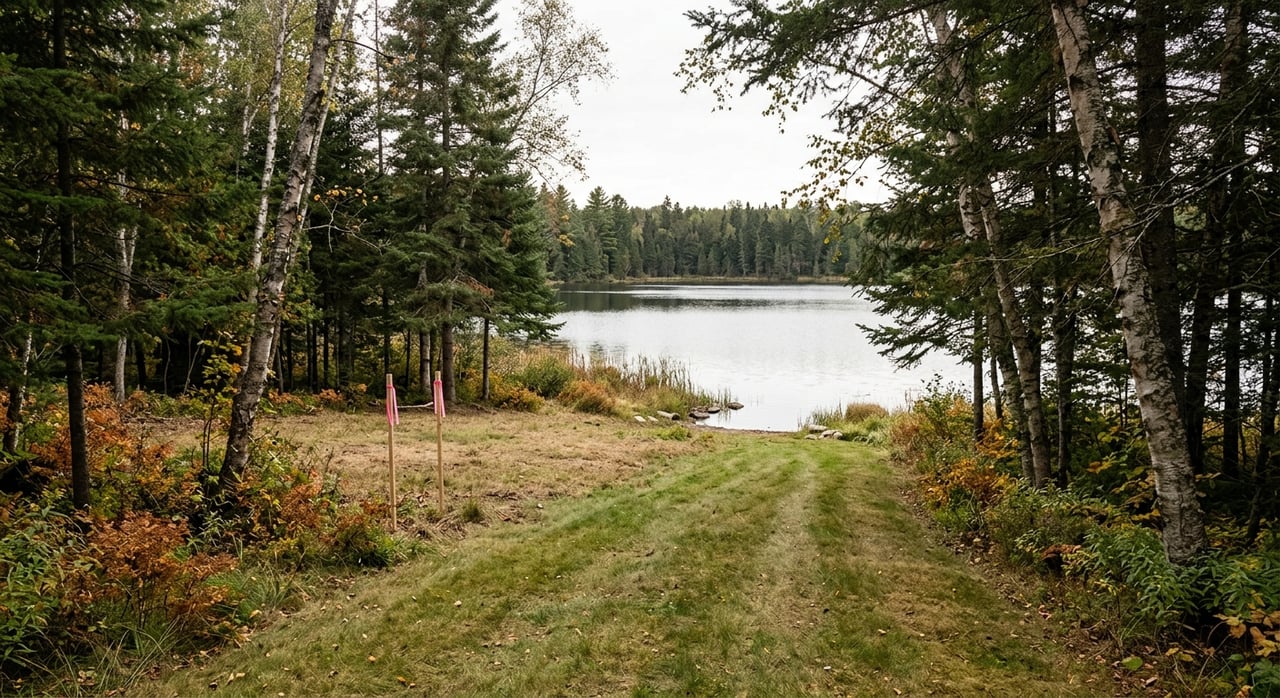
Buying waterfront land in Aitkin can feel exciting right up until you realize the real question is not just Do you like the lot? It is Can you actually use it the way you want to? If you are dreaming about building a cabin, year-round home, or simple Up North getaway, you need clarity on zoning, setbacks, shoreland rules, wetlands, and permits before you move forward. This guide walks you through the practical checks that matter most in Aitkin so you can make a more confident land purchase. Let’s dive in.
One of the first things to confirm is whether the parcel is in county-administered territory or inside the City of Aitkin. That matters because shoreland review and land use oversight can follow different local rules depending on where the property sits.
In Aitkin County, waterfront land is governed through local shoreland standards that build on Minnesota’s statewide framework. The Minnesota DNR notes that local governments can be more restrictive than the state baseline, which is why county or city review is so important early in the process. You can see that framework in the Minnesota shoreland management overview.
If the parcel is inside the city, the City of Aitkin Planning Commission handles zoning-related reviews, variances, and subdivisions. The city also has a Shoreland Overlay District covering land within 300 feet of rivers and streams and 1,000 feet of lakes, ponds, or flowages, with separate rules for the Mississippi River overlay.
If the parcel is outside city limits, Aitkin County Environmental Services is typically your first stop for zoning and shoreland questions. The county’s shoreland district summary is one of the most useful documents for screening lot standards before you buy.
Not every waterfront parcel is regulated the same way. In Minnesota, shoreland rules depend on how the lake or river is classified by the DNR, and that classification affects setbacks, lot size, width, and other development standards.
The DNR explains that shoreland classifications apply to public waters assigned a DNR classification, including most lakes of 25 acres or more in unincorporated areas and certain rivers and streams. You can review that system on the DNR shoreland classification page.
In Aitkin County, those classifications can make a big difference. According to the county’s shoreland summary, minimum standards for lakes include:
Those differences can dramatically change whether a lot works for your plans. A parcel that looks generous on paper may have a much smaller usable area once the correct classification is applied.
When you buy vacant waterfront land, the key question is whether the site has a realistic buildable envelope. That means the portion of the lot where a home, septic area, driveway, and related improvements may fit after all applicable constraints are accounted for.
In Aitkin County, you will want to look at more than just the house setback from the water. The county summary also lists shore impact zones of 75, 50, and 50 feet, plus septic setbacks of 150, 75, and 75 feet, depending on the waterbody classification. Those layers can quickly tighten what is possible on a parcel.
It helps to think about the lot in practical terms:
A lot can be legally conforming and still be difficult to build on. That is why reviewing dimensions early is so important.
Some of the biggest waterfront surprises are not visible in a quick showing. A beautiful view can come with bluff restrictions, wet ground, or floodplain review that changes the cost and complexity of building.
The DNR defines a bluff as a slope draining toward a water body where the average grade is at least 30 percent between the toe of the bluff and a point at least 25 feet above ordinary high water. The DNR also notes that a surveyor can help determine exact bluff boundaries and the bluff impact zone through a field review. That guidance is explained on the DNR property owner shoreland page.
Wetlands can also limit or reshape the usable part of a parcel. Aitkin County administers the Wetland Conservation Act locally, and draining, filling, or altering wetlands usually requires some form of authorization. Depending on the situation, federal review may also apply. The county outlines that process on its wetlands information page.
Floodplain issues matter too. Under the county’s floodplain ordinance, a zoning permit is required for erection, addition, alteration, fill, excavation, storage of materials, and other activities in the flood plain. If any part of the parcel appears low or near a river corridor, this should be screened before you finalize a purchase.
Many buyers assume that if they own the land, they can clear, grade, or build as needed. Waterfront land usually does not work that way, especially in shoreland areas.
The DNR states that shoreland lots are generally capped at 25 percent impervious surface. Aitkin County’s shoreland summary adds another local standard, stating that lot building coverage must not exceed 15 percent. In practical terms, hard surfaces and building footprint can become a limiting factor faster than many buyers expect.
Shoreline structures also have tighter limits than people often assume. The DNR allows one water-oriented accessory structure per lot under certain size and placement standards, but Aitkin County’s local summary shows a narrower allowance of 120 square feet and 10 feet in height. If you are picturing a lakeside shed or similar structure, confirm the local rule before you buy.
Vegetation is another piece of the buildability puzzle. The DNR recommends maintaining native shoreline vegetation to help reduce erosion and runoff, and Aitkin County treats vegetation alteration in shore impact zones, bluff impact zones, and steep slopes as permit-sensitive work. That means shoreline clearing may be more limited than it first appears.
On straightforward in-town lots, due diligence can be simple. On waterfront land, especially in northern Minnesota, it usually pays to bring in a few professionals before closing if the site has any complexity.
A surveyor can be especially valuable when boundaries, bluff lines, or the true buildable envelope are not obvious. The county’s permit site-plan materials show the kind of detail expected in the review process, including property lines, wells, septic distances, waterways, buildings, utilities, and reference points. You can see those expectations in the county’s online permitting instructions.
Depending on the parcel, your early due diligence team may include:
This is often the difference between buying with confidence and buying with expensive unknowns.
If the parcel already has improvements, or if you are buying land that may later support a dwelling, septic and water questions deserve close attention. Aitkin County requires permits for construction, installation, modification, operation, and replacement of subsurface sewage treatment systems.
For certain transfers involving a dwelling unit or other building served by or required to have septic, the county requires a certificate of compliance before title transfer unless an exemption applies. The county also notes that new construction in the shoreland district requires compliance inspection, except for decks, patios, and accessory buildings under 240 square feet. Those details are summarized on the county’s buying and selling property page.
If a well is already on the property, testing matters. Aitkin County offers testing for coliform bacteria, E. coli, and nitrates, and cites Minnesota Department of Health recommendations for annual coliform testing and nitrate testing every one to two years. More details are available on the county’s water testing page.
Even if a parcel looks buildable, timing still matters. Aitkin County requires land use permits for new buildings, moved structures, additions, changes in height or projection, changes of use, permit extensions, and new or replacement septic systems.
The county states that the zoning office reviews applications, conducts site visits as needed, and may take up to 60 days from a complete application to issue a decision, though the office’s goal is two weeks. Electrical permits are handled through the Minnesota Department of Labor and Industry, not the county. Those steps are outlined on the county’s land use permit page.
Permit costs can also add up. Aitkin County’s fee schedule includes separate charges for land alterations, vegetation alterations, variances, CUPs, IUPs, surveyor review, plats, and septic permits. That makes it smart to budget for pre-construction and approval costs, not just the land price itself.
Before you make an offer on Aitkin waterfront land, try to answer these questions:
If you can answer those questions early, you will be in a much stronger position to judge whether a lot is truly worth pursuing.
Waterfront land can be one of the most rewarding purchases you make in northern Minnesota, but it is rarely a plug-and-play transaction. A lot that seems perfect online may have meaningful site constraints, while a parcel that looks complicated at first glance may still be a great fit with the right due diligence.
That is where local insight helps. When you work with a team that understands lake-country property, you can ask better questions early, spot potential issues faster, and move toward the right parcel with fewer surprises. If you are thinking about buying waterfront land in or around Aitkin, Mike Kennedy can help you evaluate options, understand the local process, and navigate your search with practical, hands-on guidance.

The more earnest money that the buyer deposits indicates to the seller a higher level of commitment.
Real estate investment is a long game, but can reap many benefits.

An Infrequently-used Mortgage Program to Help Free Up Cash

Mike offers advice on the best time to list real estate for Fall & Winter market in the Brainerd Lakes Area.

Easy ways to get to know people in the community.

How to Get the Most Out of Your Home Inspection

The shift to indoor living and holiday entertaining are right around the corner.

Increased property values offer many options.

Hiring the right moving company can make a big difference.
Mike offers years of proven experience successfully helping clients, buy, sell and invest in Lake Country Real Estate.